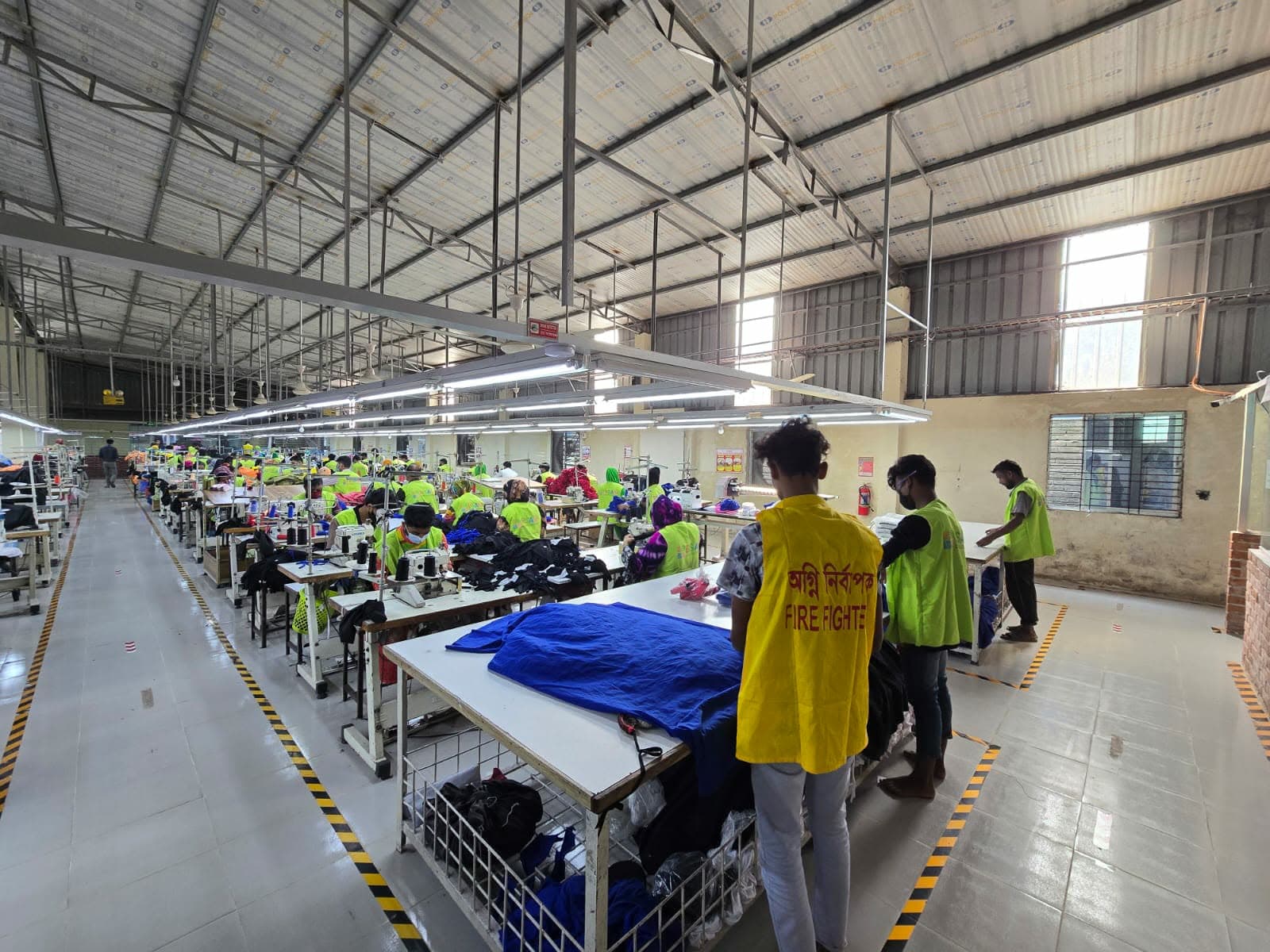
Bangladesh manufactures over 80 million garments annually and serves as the sourcing hub for brands across North America, Europe, and Australia. But not all Bangladesh manufacturers are the same. Choosing the right partner means understanding what separates quality factories from price-driven operations, and knowing which red flags to watch for before you commit capacity and samples. Whether you are evaluating knit, woven, or denim capabilities, or working within tight MOQ constraints, this guide covers the vetting process that protects your brand and your margin.
Why Bangladesh is the go-to for apparel manufacturing
Bangladesh dominates global apparel production because it combines lower labor costs with established infrastructure, stable supply chains, and deep expertise across all garment categories. More importantly for buyers, Bangladesh factories have learned to manage low minimum order quantities (MOQs) without sacrificing quality, making it viable for emerging brands and product launches.
However, scale comes with variation. A factory with 50 production lines that specializes in knit garments operates very differently from a smaller shop doing contract work for larger brands. The factory that handles 500-unit orders with care is not the same as one that only wants 5,000-unit minimums.
- • Bangladesh accounts for 6% of global apparel production by volume and 12–15% by supply chain reach.
- • Most major Bangladesh factories have multiple certifications (BSCI, WRAP, ISO) to qualify for European and North American markets.
- • Lead times are competitive: samples in 5–7 days, bulk production in 30–45 days depending on complexity.
- • Fabric sourcing is localized—most mills are in or near Dhaka, reducing logistics delays.
Understand the factory structure and specialization
Before evaluating a specific factory, know what category of operation it is. Some Bangladesh factories are vertically integrated (they manage yarn, fabric, dyeing, and finished garments in-house). Others focus only on garment construction and source fabric from mills or traders. Some operate their own washing facilities for denim; others send finished denim to specialized wash partners.
The type of factory you choose depends on your product. If you are sourcing basics (t-shirts, polos) in consistent fabrics, you have more flexibility. If you need advanced wash effects, custom dyes, or specialized finishes, you need a factory with in-house capabilities or a proven track record with those vendors.
- • Fully integrated: Yarn → fabric → garment → finish (more control, higher minimums).
- • Fabric suppliers: Buy finished fabric and focus on garment construction and QC.
- • Specialized finishers: Expert in dyeing, washing, embroidery, or other post-production.
- • Ask the factory directly: What steps do you handle in-house, and what do you outsource? Transparency here tells you a lot.
Evaluate MOQ and production capability realistically
MOQ is often the first question, but it should not be the only one. A factory that quotes 500 units per style sounds good, but can they handle it without cutting corners? Will they produce 500 units of your exact specifications, or will they batch similar styles together and hope it works? For deeper guidance on managing MOQ decisions, review our full guide on how MOQ affects your product launch timeline and cost structure.
The right question is not just 'What is your MOQ?' but 'How do you manage my specific MOQ, and what quality standards apply at that volume?' A factory that has managed dozens of low-MOQ orders from other startups has the process down. One that rarely goes below 2,000 units is likely to struggle with your 500-unit order.
- • Ask for references from other brands at your minimum order size.
- • Request to see production schedules or timelines for orders at your planned volume.
- • Confirm whether MOQ includes all colorways and sizes, or if it is per SKU.
- • Understand the sampling process: Is the first sample free? What is included in approval samples?
- • Check whether the factory offers flexible payment on small orders or if they require deposit upfront.
Verify compliance certifications and audit history
Compliance is not optional if you sell into North American or European markets. Buyers in these regions increasingly require proof of ethical manufacturing, safe working conditions, and environmental responsibility. The right Bangladesh factory will have current certifications and be transparent about their audit history. Learn about what compliance standards actually protect your supply chain and your brand reputation.
The most recognized certifications are BSCI (Business Social Compliance Initiative), WRAP (Worldwide Responsible Accredited Production), and SEDEX. Some factories also carry ISO 9001 (quality management) and ISO 14001 (environmental management). Do not accept just a list of badge names—ask for actual audit reports or certification summaries from the last 12 months.
- • BSCI: Covers social compliance, labor practices, and environmental standards.
- • WRAP: Focuses on responsible manufacturing and ethical production.
- • SEDEX: Provides a platform for ethical supply chain data and audit visibility.
- • ISO certifications: Add credibility but are not substitutes for social/ethical compliance.
Assess fabric sourcing, dyeing, and finishing capabilities
What the factory can produce depends heavily on what fabrics and finishes they can access or create. Some buyers need custom dyes (specific Pantone matches, colorfast standards). Others need advanced washing effects (vintage fading, stonewashed, over-dyed). Some require specialized finishes like softening or performance treatments. Understanding whether a factory offers knit, woven, denim, or multi-category capabilities helps you align products with production strengths.
A factory with in-house dyeing and washing teams can deliver faster, more consistent results. A factory that outsources these steps to partners needs strong relationships with those partners and clear QC checkpoints built into the process. Either can work, but you need to know which one you are dealing with and plan accordingly.
- • Knit suppliers: Ask about jersey types (single, double, interlock), GSM ranges, and access to sustainable fabrics.
- • Woven suppliers: Confirm cotton sourcing, availability of blends, fabric weights, and finishing capabilities (softening, wrinkle-free, etc.).
- • Denim specialists: Verify wash techniques, custom dye capabilities, shrinkage standards, and lead time for wash samples.
- • Dyeing and finishing: If outsourced, ask for the factory's quality control process and how they manage timeline pressure.
Test their communication and responsiveness
A manufacturing partnership is a communication partnership. Before you commit to production, test how responsive and clear the factory is during the inquiry and sampling phase. This is where you will see their real working style.
Send a detailed inquiry with specific questions and a timeline. Does the factory respond within 24 hours? Are the answers thorough, or do they avoid details? Do they ask clarifying questions, or do they just quote a price? A factory that communicates clearly in the early stage is more likely to keep you informed during production.
Ask the hard questions before sampling
Before you approve a first sample, sit down and ask the factory a structured set of questions. Their willingness and ability to answer these questions tells you whether they are serious about your business and whether they understand your standards.
- • Production timeline: From order placement to shipment, what is the realistic schedule?
- • Quality control: How many inspection points happen before finished goods are packed?
- • Revision process: If we see issues in approval samples, how many revision rounds are included? What is the cost of extra revisions?
- • Lead time variability: Do you have peak and off-peak seasons? Which months can you guarantee faster turnaround?
- • Fabric sourcing: If a specific fabric is unavailable, do you suggest alternatives or do we have to find new suppliers?
- • Payment terms: Are you flexible on payment structure for first-time orders?
- • Communication protocol: Who is my main contact? What is the escalation path if issues arise during production?
- • References: Can you provide contact information for three other brands at a similar order size?
Recognize red flags before it is too late
Some issues signal that a factory may not be a good long-term fit. Watch for these warning signs during the inquiry, sampling, and early production phase.
- • Extremely low pricing on bulk orders (may indicate quality cuts or hidden fees later).
- • Vague answers about certifications or QC processes.
- • Unwillingness to share compliance documentation or audit reports.
- • Slow communication or missed deadlines during sampling (predictor of production issues).
- • Pressure to commit production without proper sampling or approval.
- • No clear process for handling bulk orders or managing multiple styles in one shipment.
- • Factory focuses only on price; does not ask about your brand standards or customer expectations.
Build a trial relationship before scaling
The first order is your test. Start with a single style at your minimum MOQ, or even slightly above, so the factory has enough volume to produce it without rushing. Use this order to evaluate their adherence to timeline, quality standards, and communication during production.
If the first order goes smoothly, you have a strong signal to proceed with larger orders or more complex styles. If there are issues, you have learned valuable lessons without risking a large shipment. Poor first orders should change your decision about whether to continue with that factory.
Once you have a factory you trust, the real partnership begins. Consistent orders, clear communication, and realistic expectations make the factory more invested in your success. That investment translates into better quality, faster turnaround, and more flexibility as your brand grows.
Key takeaways
- • Bangladesh offers the best value-to-quality ratio for apparel, but partner selection is critical.
- • Low MOQ does not mean low standards—look for factories with compliance certifications and transparent QC.
- • The right manufacturer communicates clearly, meets lead times consistently, and treats smaller orders as seriously as larger ones.
Frequently asked questions
What is the typical lead time for apparel from Bangladesh?
Sample lead time is usually 5–7 days for standard items, and 10–14 days for complex or custom products. Bulk production typically takes 30–45 days from order confirmation, depending on complexity, fabric sourcing, and finishing requirements. Always confirm exact timelines with your factory before ordering.
Do I need to visit a Bangladesh factory before ordering?
A factory visit is valuable for larger orders or long-term partnerships, but not always necessary for first-time sourcing. Strong communication during sampling, verified compliance documentation, and reference calls with other buyers can build confidence. Many successful brands start remotely and visit only after a few successful orders.
What is the minimum MOQ for small brands?
MOQ varies widely by factory and product type. Many Bangladesh manufacturers support MOQs as low as 300–500 units per style for knit basics, and 500–1,000 for woven or denim items. Factories that specialize in low-MOQ orders (like Sourceloom partners) treat smaller batches with the same care as larger shipments, ensuring quality and consistency regardless of scale.
How do I know if a factory is compliant and ethical?
Ask for current audit reports and certifications (BSCI, WRAP, SEDEX, ISO). Request specific documentation from the last 12 months—do not accept certification names alone. Ask for references from other buyers and clarify how the factory handles working conditions, Environmental Standards, and labor practices. A reputable, compliant factory will provide transparent documentation.
What should I do if my approval samples don't meet expectations?
Clear communication with your factory is key. Document specific issues, request revision samples on a clear timeline, and agree upfront on how many revision rounds are included. If the factory is unresponsive or dismissive, it is a red flag—this is your chance to switch before bulk production starts. Quality concerns in sampling will likely worsen in production.
Can manufacturers handle custom dyes and wash effects?
Many Bangladesh factories have in-house dyeing and washing capabilities, or strong partnerships with specialized vendors. Before ordering, confirm whether the factory handles these processes and ask to see examples of previous custom dyes and washes. Lead time and cost will vary based on complexity and whether outsourcing is involved.
What if I need to change styles or sizes mid-production?
Changes mid-production are costly and risky. Before production starts, confirm the exact specifications, color, size mix, and quantities in writing. Once production begins, inform your factory immediately of any needed changes and expect additional costs and delays. This is why clarity in sampling and PO specifications is so critical.
How do I manage payment and payment terms with a new factory?
Typical terms are 50% deposit with order and 50% upon shipment inspection. Some factories accept 30% upfront for first-time orders. Always negotiate terms upfront, and use a third party or escrow service if you are unfamiliar with the factory. Once a relationship is established, more flexible terms become available.